
What Is the Recommended Age for a Child's First Orthodontic Visit?
Your child should see an orthodontist by age 7, according to the American Association of Orthodontists. At this age, the first adult molars have typically erupted, allowing an orthodontist to evaluate bite patterns and jaw development. This early visit is a screening, not necessarily the start of treatment. Most kids won't need braces yet, but spotting potential issues early gives families options.
By age 7, your child has a mix of baby teeth and permanent teeth. This combination reveals a lot. A trained orthodontist can spot crowding, crossbites, and jaw alignment concerns before they become bigger challenges. Think of it as a growth check for their smile. Families across the Triad often use this milestone as a natural starting point for understanding their child's dental development, and Davis and Goldberg Ortho sees many young patients at this important age.
What Happens at Your Child's First Orthodontic Visit?
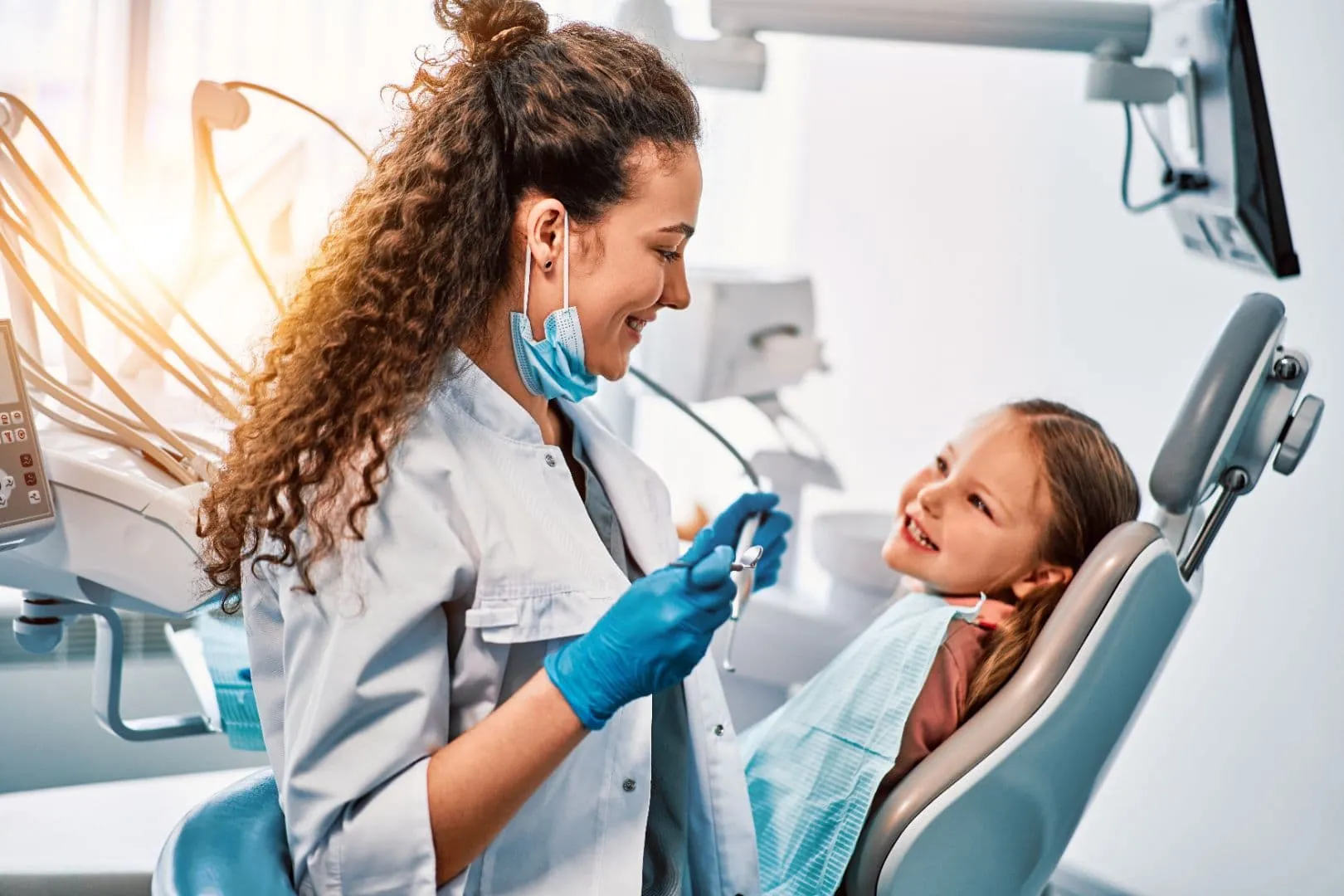
Your child's first orthodontic visit is simple and stress-free. It starts with a full exam of their teeth, jaw alignment, and bite. Digital X-rays or photos help board-certified orthodontists see what's happening beneath the surface with developing teeth.
During this visit, expect a discussion of:
- Growth patterns: How your child's jaw and facial bones are developing
- Oral habits: Whether thumb-sucking or tongue thrust might affect alignment
- Eruption timeline: When remaining permanent teeth should come in
- Bite assessment: How upper and lower teeth fit together
After the evaluation, you'll hear one of three recommendations:
- Monitor growth: Schedule check-ins every 6-12 months to watch development
- Early treatment: Address a specific issue now while bones are still growing
- Wait and watch: Hold off until all permanent teeth erupt
Most children fall into the "monitor" category. That's good news. It means staying ahead of potential concerns without rushing into treatment.
Benefits of Seeing an Orthodontist Early
Early orthodontic evaluation offers several key benefits: guiding jaw growth, correcting harmful habits, creating space for adult teeth, protecting protruding teeth, simplifying future care, and helping kids feel good about their smiles. Catching small issues during active growth often leads to easier, shorter treatment later on, which is why many Triad parents schedule that first visit by age 7.
How Does Early Treatment Guide Jaw Growth?
While bones are still developing, an orthodontist can influence their direction. This means:
- Guides jaw growth: Shaping development while growth plates remain active
- Creates space: Expanders and other appliances make room for crowded permanent teeth
- Corrects harmful habits: Thumb-sucking and tongue thrust respond well to early intervention
Why Does Early Intervention Matter for Long-Term Smiles?
Catching issues early often makes future care simpler:
- Protects protruding teeth: Front teeth that stick out are more vulnerable to injury during sports and play
- Simplifies future treatment: Addressing issues now can mean shorter treatment later
- Builds healthy habits: Kids feel good about their smiles, and a healthy bite helps them eat, speak, and grow with confidence
The AAO notes that certain conditions respond best to early treatment. Crossbites, severe crowding, and significant jaw discrepancies fall into this category. Catching these early can make a real difference in outcomes for kids growing up in Greensboro, Winston-Salem, and other Triad communities.
Why Age 7 Is When Your Child Should See an Orthodontist for Phase 1 vs. Phase 2 Care
Not every child needs early treatment. Here's how to understand the options:
| Approach | Age Range | Best For | What It Involves |
|---|---|---|---|
| Phase 1 (Interceptive) | Ages 7-10 | Skeletal issues, crossbites, severe crowding, jaw discrepancies | Expanders, partial braces, habit appliances |
| Phase 2 (Full) | Ages 11+ | Full alignment of all permanent teeth | Braces or Invisalign |
| Single-Phase Treatment | Ages 11-14 | Mild crowding, cosmetic concerns, stable bite | Complete treatment after adult teeth erupt |
When early treatment makes sense: Your child has a crossbite affecting jaw growth. Their upper jaw is too narrow. Front teeth protrude significantly. Baby teeth were lost very early or very late.
When waiting works well: Mild crowding that won't worsen. Cosmetic concerns only. Stable bite with no functional issues. All permanent teeth nearly erupted.
An orthodontist will evaluate each child individually. There's no one-size-fits-all answer, and honest guidance should be based on what the exam reveals about your child's unique growth pattern and bite.
How Much Does Early Orthodontic Treatment Cost?
Here's what families can generally expect financially:
Initial visits are often offered as free consults at many practices. Parents can get answers without any obligation.
Growth observation visits are typically low-cost or included as part of monitoring programs. These check-ins track development without committing to treatment.
Two-phase treatment may cost more upfront than single-phase treatment. But it can prevent more complex and costly corrections later. Think of it as fixing a small roof leak before it becomes water damage.
Insurance coverage often includes orthodontic benefits for children. Many plans cover a portion of treatment, and most practices help families understand their benefits.
Appliance selection affects pricing too. A palatal expander costs differently than partial braces. Clear explanations of options help families plan ahead.
Many practices in the Triad also offer 0% financing and flexible payment plans because access to great orthodontic care matters for every child.
Signs Your Child Should See an Orthodontist Now
Don't wait for the age-7 milestone if you notice these signs:
- Early or late loss of baby teeth: Timing matters for proper spacing
- Difficulty chewing or biting: Functional issues deserve attention
- Mouth breathing: Can affect facial development over time
- Thumb-sucking past age 5: May be shifting teeth and jaw position
- Crowded, gapped, or crooked teeth: Visible alignment concerns
- Jaw clicking or popping: Could indicate joint or bite issues
- Teeth that don't meet properly: Open bites, underbites, or crossbites
Trust your instincts. If something seems off about your child's bite or smile, schedule a visit. Early evaluation never hurts, and it often helps. Many Triad families discover that a quick screening puts their minds at ease, even when no treatment is needed right away.
Frequently Asked Questions
Is age 7 too young for braces?
Age 7 is the right time for an evaluation, not necessarily braces. Most 7-year-olds don't need treatment yet. This visit helps spot developing issues and decide if early intervention would benefit your child or if monitoring makes more sense.
What happens if I wait until my child is a teenager?
Waiting until the teen years works fine for many kids. But some issues are easier to correct while bones are still growing. If your child has a significant bite issue or jaw discrepancy, early treatment can produce better results than waiting. Many parents in the Triad still see excellent results starting in the teen years for cosmetic concerns or mild crowding.
Does my child need a referral from the dentist?
No referral is needed. You can schedule directly with most orthodontic practices, including Davis and Goldberg Ortho. Many families come in after their dentist mentions a concern, but you're welcome to book an evaluation anytime.
How long does the first orthodontic visit take?
Plan for about 30-45 minutes. The exam, any needed images, and a discussion of findings all happen during this visit. You'll leave with a clear understanding of your child's orthodontic health and any next steps.
Will my child need braces if seen at age 7?
Probably not right away. The AAO recommends age-7 evaluations for screening purposes. The goal is to spot potential issues and create a monitoring plan. Most children don't start active treatment until more permanent teeth have erupted.
Is early orthodontic treatment covered by insurance?
Many dental insurance plans include orthodontic coverage for children. Benefits vary by plan, so verifying coverage during your first visit is a smart step. Most practices work with a wide range of insurances to help families maximize their benefits and plan for any out-of-pocket costs.