
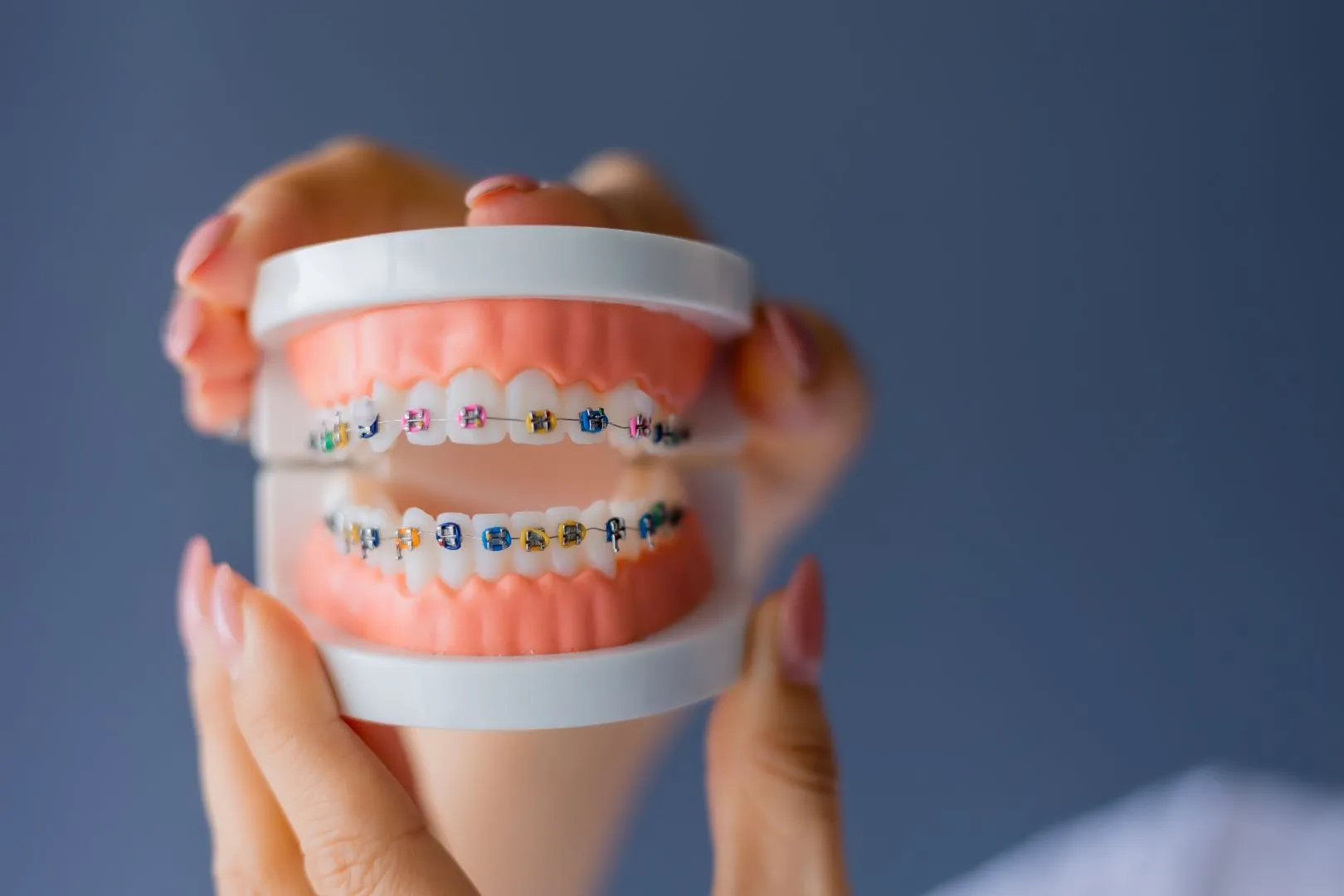
Ceramic braces do not stain on their own. The tooth-colored brackets are made of a polycrystalline material that resists discoloration, but the elastic ties that hold the wire can pick up color from coffee, tea, curry and red wine between visits.
That single distinction explains most of what people hear about clear braces. The hardware stays the color it started. The small rubber ties around each bracket are the part that changes, and they are replaced at every adjustment appointment.
What Are Ceramic Braces, and How Are They Different From Metal?
Ceramic braces work exactly like metal braces. The only difference is the bracket material: tooth-colored or translucent ceramic instead of silver metal.
Where the visibility difference actually comes from
At conversational distance, most of what people notice about braces is contrast — bright metal against enamel. Ceramic brackets remove most of that contrast. Many patients also choose a frosted or clear elastic tie instead of a colored one, which removes the rest. Up close, ceramic braces are still visible; from across a room or in a photograph, they are considerably harder to spot.
What stays exactly the same
Treatment mechanics, appointment cadence, oral hygiene requirements and the range of bite problems that can be corrected are unchanged. Ceramic brackets are a cosmetic choice about how treatment looks, not a different category of treatment. Our clear braces in Greensboro, NC and clear braces in High Point, NC pages cover which cases each office typically treats this way.
Do Ceramic Braces Stain? What Actually Discolors
This is the question that decides the case for most adults, and the honest answer has two parts. The brackets resist staining. The ligatures — the small elastic rings — do not.
The elastic ties, not the brackets
Clear and white ligatures are porous enough to absorb pigment. Coffee, black tea, red wine, tomato sauce, curry, turmeric, soy sauce, berries and tobacco are the usual culprits. The ties are swapped at every adjustment, so any color they pick up is temporary by design. If discoloration bothers you between visits, a silver or darker-colored tie sidesteps the issue entirely, and some patients alternate depending on what is coming up on the calendar.
The bonding material at the bracket edge
The adhesive that holds each bracket can pick up a faint stain line at its border over a long treatment, particularly with heavy coffee or tobacco use and inconsistent brushing. It is usually invisible until the brackets come off, and it polishes away at the debond appointment.
What you can do about it
- Rinse with water after coffee, tea or anything deeply pigmented
- Brush after meals, and use a proxy brush around the bracket edges where pigment settles
- Skip whitening toothpaste during treatment — it lightens exposed enamel but not the enamel under a bracket, which can leave an uneven result at debond
- Ask for fresh ties if an event is coming up before your next scheduled visit
Ceramic Braces vs. Metal Braces vs. Clear Aligners
There is no single best option. There is the option that fits your bite, your job, your sport and your tolerance for hardware. This is the short version of the conversation we have at a free consultation.
| Ceramic braces | Metal braces | Clear aligners | |
|---|---|---|---|
| Visibility | Low — tooth-colored brackets | Highest — silver brackets | Lowest — removable clear trays |
| Fixed or removable | Fixed | Fixed | Removable, 20-22 hours of daily wear required |
| Bracket durability | Slightly more brittle than metal; a bracket can chip on very hard foods | Most durable option | No brackets |
| Staining concern | Elastic ties can discolor between visits; brackets do not | None | Trays can cloud if worn while drinking anything but water |
| Best suited to | Teens and adults who want fixed treatment that is hard to notice | Complex cases, contact sports, younger patients | Patients who will reliably wear and track their trays |
If you are weighing the removable route as well, our Invisalign page and the wider braces options we offer lay out how each one is planned.
Who Is a Good Candidate for Clear Braces?
Adults in professional or client-facing roles
The most common reason adults ask about ceramic brackets is that they want fixed treatment without hardware being the first thing a client notices. Because the brackets are fixed, there is nothing to remember to wear, which suits people whose days are unpredictable.
Teens who want fixed treatment that is easy to overlook
Ceramic brackets are a common request for teens who do not want to manage aligner trays but also do not want obvious braces in school photos. The trade-off worth discussing is contact sports: metal brackets tolerate impact better, and a mouthguard is essential either way.
When we would suggest something else
Very complex bites requiring heavy mechanics, patients who grind their teeth hard, and cases with a deep bite where lower teeth strike upper brackets are all situations where metal is usually the more durable and sometimes the faster choice. Your orthodontist will say so directly at the consultation rather than after treatment starts.
Frequently Asked Questions About Ceramic Braces
Do ceramic braces take longer than metal braces?
Treatment time is driven by the movements your bite needs, not by bracket color. In some complex cases metal hardware allows slightly more aggressive mechanics, which can shorten treatment; in routine cases the timelines are comparable.
Can ceramic brackets be whitened if they discolor?
The brackets themselves are not whitened — they are not the part that discolors. Stained elastic ties are simply replaced at your next adjustment, which restores the original look.
Will ceramic braces damage my enamel?
Bonding and debonding a ceramic bracket is a routine procedure, and enamel is polished after removal. The real enamel risk during any fixed treatment is decalcification from plaque left around brackets, which is why brushing habits matter more than bracket material.
How do I find out which option is right for me?
A free consultation includes an exam, imaging and a straight recommendation. You can start with a virtual consult from a phone photo, or call or text our team at (336) 887-3168 to book at our High Point or Greensboro office.