
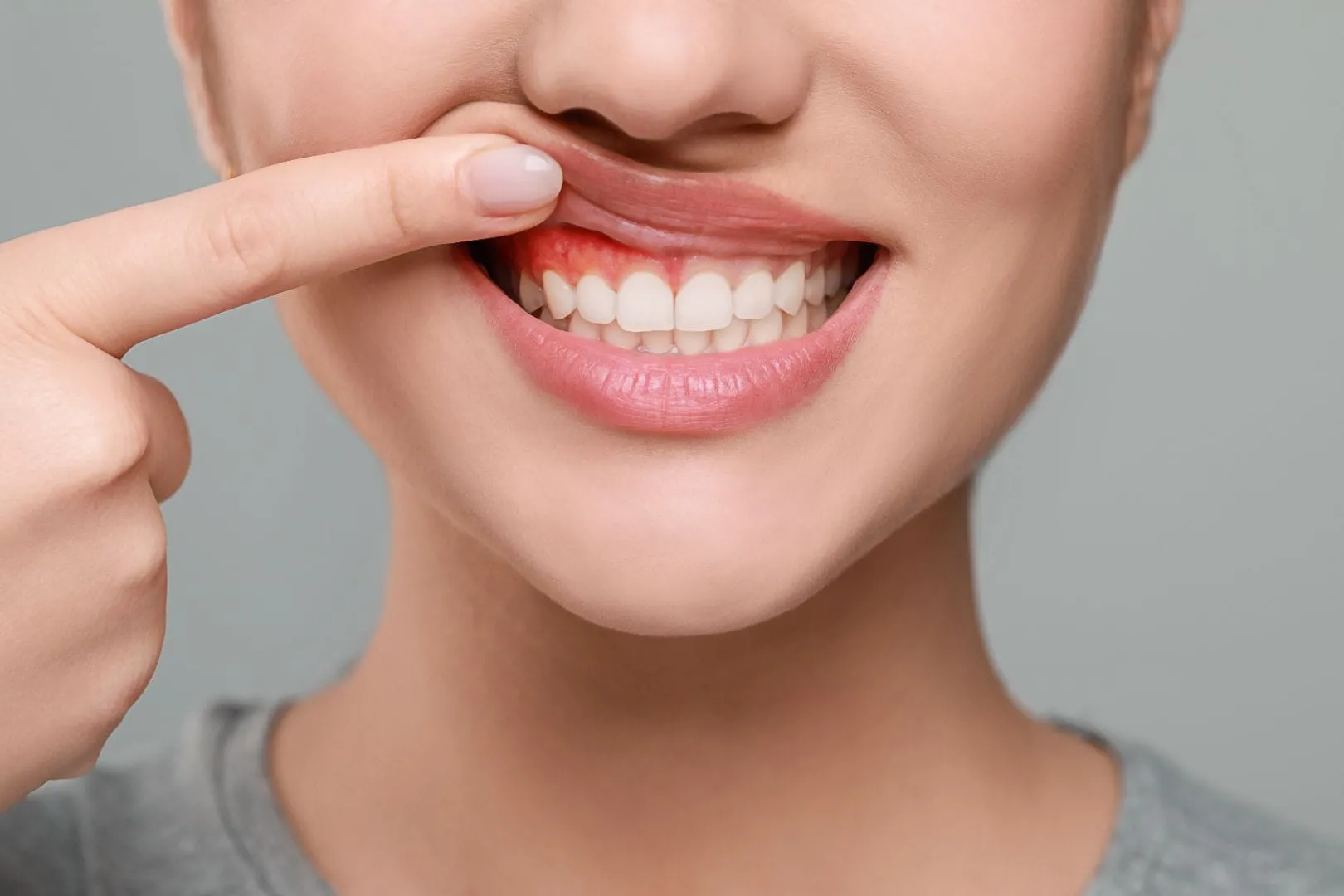
Braces and Invisalign don't directly cause gum recession, but a few related factors during orthodontic treatment can contribute to it — most commonly inconsistent oral hygiene around brackets and wires, pre-existing thin gum tissue, or teeth that are moved outside the boundary of the surrounding bone. Recession during treatment is usually manageable and often traceable to a specific, identifiable cause rather than the appliance itself. If you notice your gums pulling back while in braces or aligners, it's worth flagging at your next visit rather than waiting.
What Gum Recession Actually Is
Gum recession happens when the gum tissue around a tooth pulls back, exposing more of the tooth's root surface than normal. It can make teeth look longer, increase sensitivity to hot, cold, or sweet foods, and in more advanced cases raise the risk of further gum and bone loss around that tooth. Recession develops gradually, which is part of why it's easy to miss until it's already noticeable.
How Braces and Hygiene Interact
Brackets and wires create more surfaces for plaque to collect around, especially along the gumline. If plaque and food debris build up consistently in those spots, the gum tissue can become inflamed — a condition called gingivitis — and chronically inflamed gum tissue is more prone to receding over time. This is less about the braces themselves and more about how much plaque accumulates around them day to day, which is why hygiene instruction is such a consistent part of orthodontic visits.
Can Invisalign Cause Gum Recession Too?
Clear aligners carry a somewhat different risk profile. Because Invisalign trays fit snugly over the teeth for most of the day, plaque and bacteria can get trapped against the gumline if teeth aren't brushed and trays aren't cleaned regularly. Some patients also unconsciously clench or apply extra pressure through aligners, which in rare cases can contribute to recession on specific teeth. As with braces, the aligner itself is rarely the sole cause — hygiene habits and how the trays are worn matter more.
Common Contributors to Gum Recession During Orthodontic Treatment
- Inconsistent brushing and flossing around brackets, wires, or under aligner trays
- Pre-existing thin or fragile gum tissue that was already at higher risk before treatment began
- Teeth moved too far toward the edge of the surrounding bone, which some treatment plans account for in advance
- Aggressive brushing technique, which can wear down gum tissue regardless of orthodontic treatment
- Underlying gum disease that existed before treatment started
How Our Orthodontists Monitor Gum Health During Treatment
Gum health is something our team checks at every adjustment visit, not just at the start and end of treatment. If we notice early signs of recession or inflammation, we can address it quickly — sometimes with a hygiene adjustment, sometimes with a referral to a periodontist for a closer look, and occasionally by adjusting the treatment plan itself if a specific tooth movement seems to be involved. Digital scans taken throughout treatment also give us a way to compare gum position over time rather than relying on memory from visit to visit.
What You Can Do to Protect Your Gums in Braces or Invisalign
A few consistent habits go a long way toward keeping gum tissue healthy throughout treatment:
- Brush at least twice a day with a soft-bristled brush, angled to reach along the gumline
- Floss daily, using a floss threader or orthodontic flosser to get under wires
- Clean Invisalign trays daily and remove them before eating or drinking anything besides water
- Use an antimicrobial or fluoride mouthwash if recommended by your orthodontist
- Keep up with regular dental cleanings alongside your orthodontic visits
When Gum Recession Needs More Than a Hygiene Fix
If recession is already noticeable and tied to a specific tooth's position rather than hygiene alone, it may need attention beyond brushing habits — sometimes a periodontist evaluates whether a gum graft or other treatment is warranted, either during or after orthodontic treatment. This is exactly why flagging changes early matters: a small amount of recession caught early has more options than recession that's gone unaddressed for a long stretch of treatment. Our team at Davis & Goldberg Orthodontics factors gum health into ongoing treatment planning rather than treating it as a separate issue from the orthodontic work itself.
Does Moving a Tooth Too Far Cause Recession?
In some cases, yes. Every tooth sits within a certain envelope of surrounding bone, and moving a tooth's root too far toward the front or back edge of that envelope can thin the bone and gum tissue covering it, which can contribute to recession over time. This is one of the reasons our orthodontists rely on digital X-rays and 3D scans throughout treatment — they let us see not just where a tooth's crown is heading, but where its root is moving relative to the surrounding bone, so a plan can be adjusted if a specific movement seems to be pushing outside a safe range.
Gum Recession That Existed Before Treatment Began
Some patients already have a small amount of recession or naturally thin gum tissue before orthodontic treatment even starts, often from a lifetime of brushing habits, genetics, or a previous dental history unrelated to orthodontics. If this is the case, our team notes it at your initial evaluation, since pre-existing thin tissue is one of the risk factors most likely to show up or become slightly more noticeable during active tooth movement. Knowing about it upfront lets us watch that area more closely rather than being caught off guard mid-treatment.
How Retainers Factor Into Long-Term Gum Health
Once active treatment ends, consistent retainer wear helps keep teeth in a stable position, which in turn helps avoid the kind of relapse movement that could put renewed pressure on already-thin gum tissue. Gum health doesn't stop being relevant just because the braces or aligners have come off — it's part of why we continue to check on it at retention visits, not only during active treatment.
Frequently Asked Questions
Is gum recession from braces permanent?
Recession itself doesn't reverse on its own, but catching it early can prevent it from getting worse, and in some cases a periodontist can address existing recession with treatment such as a gum graft.
Should I stop wearing my aligners if my gums are receding?
Don't stop wearing your aligners without talking to your orthodontist first; instead, mention the recession at your next visit so the cause can be identified and addressed appropriately.
Can improving my brushing technique stop gum recession during treatment?
If hygiene or brushing technique is the main contributor, adjusting your routine can help slow or stop further recession, which is why our team reviews technique at adjustment visits.
Does everyone in braces or Invisalign get some gum recession?
No. Many patients complete orthodontic treatment with no noticeable gum recession at all; it tends to show up in specific situations rather than as a universal side effect.
Can gum recession be reversed once treatment is finished?
Gum tissue that has already receded typically doesn't grow back on its own, though a periodontist can sometimes address existing recession with a gum graft or other procedure if it's significant enough to warrant treatment.
Disclaimer: The content on this blog is not intended to be a substitute for professional medical advice, diagnosis, or treatment. Always seek the advice of qualified health providers with questions you may have regarding medical conditions.