
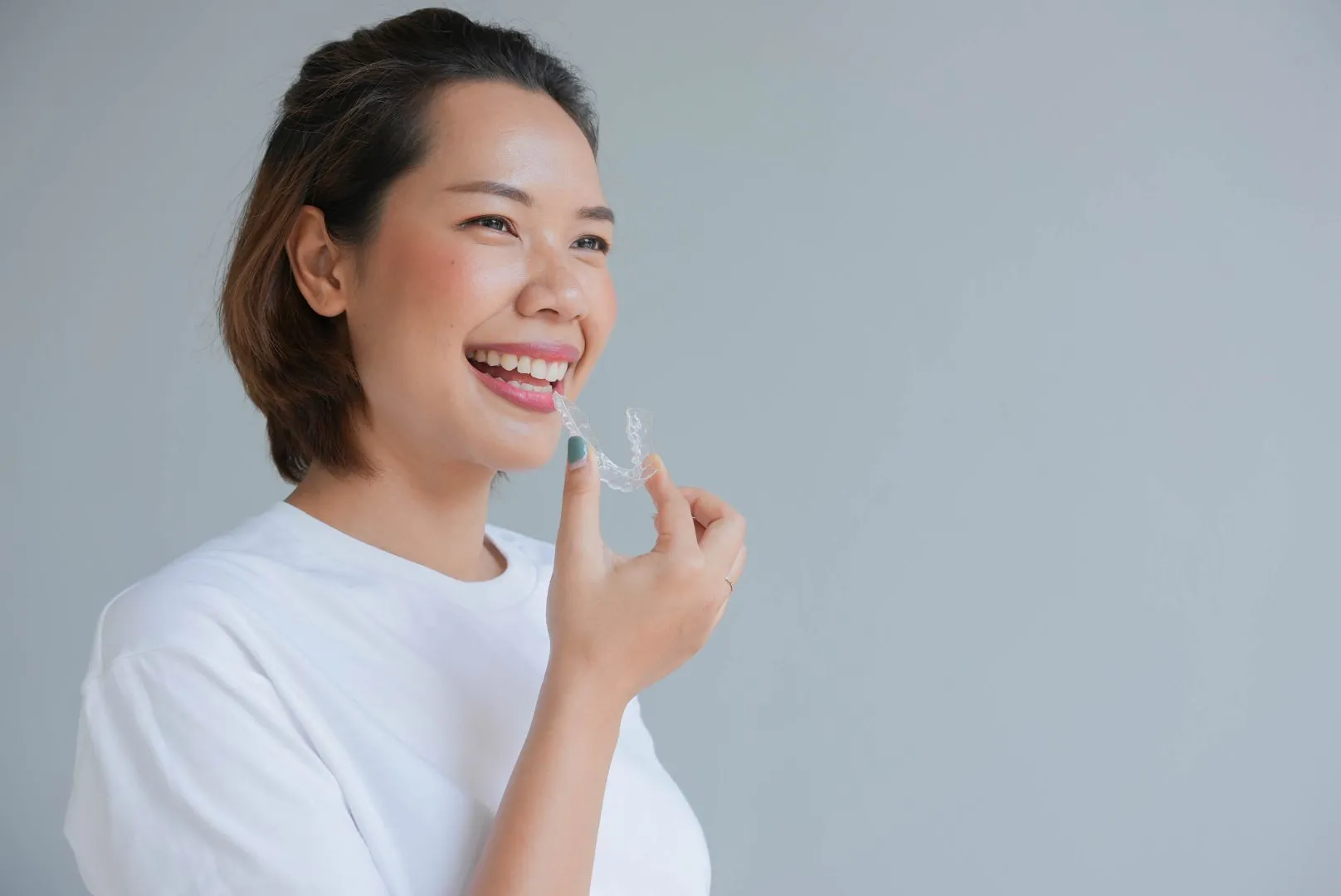
You can absolutely whiten your teeth while wearing Invisalign — and in some ways, clear aligners make whitening more convenient than braces do, since they’re removable. That said, timing and product choice matter: whitening gel applied under an aligner tray isn’t the same as a standard take-home whitening kit, and doing it the wrong way can lead to uneven results or unnecessary sensitivity.
Why Invisalign Makes Whitening Easier Than Braces
With traditional metal braces, whitening is largely a waiting game — the brackets cover part of each tooth, so any whitening you do gets uneven, and most orthodontists recommend holding off until the brackets come off. Invisalign aligners come off for eating, brushing, and yes, whitening, which means you don’t have to choose between straightening and whitening one after the other. Many patients use their aligner trays as a whitening tray, swapping in whitening gel instead of putting the aligner in for its usual job.
The Right Way to Whiten With Aligners
If you want to whiten while in Invisalign treatment, a few things make the process work better and more evenly:
- Use a whitening gel designed for tray application, not a strip-based product, so it distributes evenly across the tooth surface the way your aligner does.
- Whiten with a spare or older tray if possible, since whitening gel can occasionally cause minor clouding on the aligner plastic over repeated use.
- Stick to the recommended wear time on your whitening product — more time isn’t better, and overuse is the most common cause of sensitivity.
- Brush and rinse before switching back to your regular aligner so no whitening gel residue gets trapped against your teeth for the following hours.
Will Whitening Affect My Treatment Timeline?
No — whitening only affects the shade of your enamel, not the alignment forces your aligners are applying. You can whiten at any point during treatment without slowing down your progress. Many patients actually prefer to whiten toward the final few weeks of treatment, so their newly straightened smile also looks its brightest right when the aligners come off for good.
What About Sensitivity?
Both orthodontic movement and teeth whitening can independently cause some tooth sensitivity, so doing both at once occasionally means slightly more noticeable sensitivity for some patients. If this happens, spacing out your whitening sessions or switching to a lower-concentration gel usually resolves it. If sensitivity is significant or doesn’t improve, check in with our team before continuing.
Should You Ask Your Orthodontist First?
It’s worth a quick conversation, especially if you’re not sure which whitening product to use or you have existing sensitivity. At Davis & Goldberg Orthodontics, we’re happy to recommend a tray-friendly whitening approach that works alongside your treatment plan rather than against it, so you get a straight smile and a bright one at the same time.
Professional vs. At-Home Whitening With Aligners
You have two main paths if you want to whiten during Invisalign treatment. At-home tray-based whitening gel, applied in a spare aligner, is convenient and budget-friendly, and works well for gradual, low-maintenance brightening alongside your treatment. In-office professional whitening delivers faster, more dramatic results in a single visit, but it’s typically done with your natural teeth exposed rather than through an aligner tray, so many patients choose to schedule an in-office whitening session close to when their treatment finishes rather than partway through, to avoid doing it twice.
Either approach can work during active treatment — the right choice mostly comes down to your timeline, budget, and how dramatic a change you’re looking for.
What About Whitening Toothpaste?
Whitening toothpaste is a safe, gentle option you can use throughout treatment without any special precautions related to your aligners, since it's simply your regular brushing routine with a mildly abrasive or polishing formula. It won’t produce dramatic results on its own, but it can help maintain brightness between more concentrated whitening sessions and is a reasonable everyday habit to pair with either at-home or professional whitening.
Timing Whitening Around Your Treatment Milestones
Many patients like to plan their whitening around specific moments in treatment rather than starting on day one. A common approach is waiting until the last several trays of your series, once most of the visible movement is done, so the final result — both the straightening and the brightening — lands around the same time your treatment wraps up. Others prefer to whiten early and simply maintain that shade with occasional touch-ups or whitening toothpaste through the rest of treatment. Either approach is reasonable; it’s really a matter of personal preference and what fits your routine.
What Our Team Recommends
At Davis & Goldberg Orthodontics, we typically suggest starting with a lower-concentration, tray-compatible whitening gel and seeing how your teeth respond before moving to a stronger formula, since starting conservative reduces the odds of sensitivity while you’re also adjusting to wearing aligners. If you mention you’re interested in whitening at a regular check-in, we’re glad to point you toward a product and routine that works well alongside your specific treatment plan and aligner-wear schedule.
Frequently Asked Questions
Can I use whitening strips instead of gel with Invisalign?
Whitening strips are designed to sit flat against teeth and generally aren’t made to be worn under an aligner tray, so a tray-compatible whitening gel typically gives more even, comfortable results during Invisalign treatment.
Will whitening damage my aligners?
Occasional use with a proper tray-based gel is generally fine, though repeated whitening in the same tray can sometimes leave slight clouding on the plastic over time, which is why using a spare tray is often recommended.
How soon after finishing Invisalign can I whiten my teeth?
You don’t have to wait at all — you can whiten during treatment or after it’s finished, whichever works better for your schedule.
Does whitening work the same on teeth that are actively moving?
Yes, whitening affects the enamel surface and isn’t impacted by the tooth movement happening underneath, so results look the same whether your teeth are mid-treatment or already in their final position.
Can whitening gel damage Invisalign attachments?
Whitening gel applied properly shouldn’t damage attachments, but avoid letting concentrated gel sit directly against an attachment for longer than recommended, and rinse thoroughly before switching back to your regular aligner.
Is it better to whiten before or after Invisalign treatment?
Both work, and it’s largely personal preference. Whitening during treatment means you get to enjoy a brighter smile sooner; whitening after treatment means your newly straightened teeth are the ones getting whitened, with no aligner logistics to plan around.
Will whitening make my aligners more visible?
Whitened teeth and clear aligners aren’t related in terms of visibility — aligners are designed to be discreet on any shade of tooth, so brightening your smile doesn’t change how noticeable your aligners are.
Can I whiten just a few teeth instead of my whole smile?
Tray-based whitening typically treats your whole arch evenly since the gel covers all the teeth the tray fits over, which actually helps avoid the uneven, patchy look that spot-whitening individual teeth can sometimes create.
Does age affect how well whitening works during Invisalign treatment?
Whitening effectiveness depends more on the type and cause of tooth staining than age itself, though older enamel can sometimes respond more gradually and may benefit from a slightly longer, more consistent whitening routine.
Should I whiten before starting Invisalign or wait until treatment ends?
Either approach can work, but many patients prefer whitening toward the end of treatment so the newly aligned smile and the brightened shade are revealed together for the final result.
Disclaimer: The content on this blog is not intended to be a substitute for professional medical advice, diagnosis, or treatment. Always seek the advice of qualified health providers with questions you may have regarding medical conditions.