
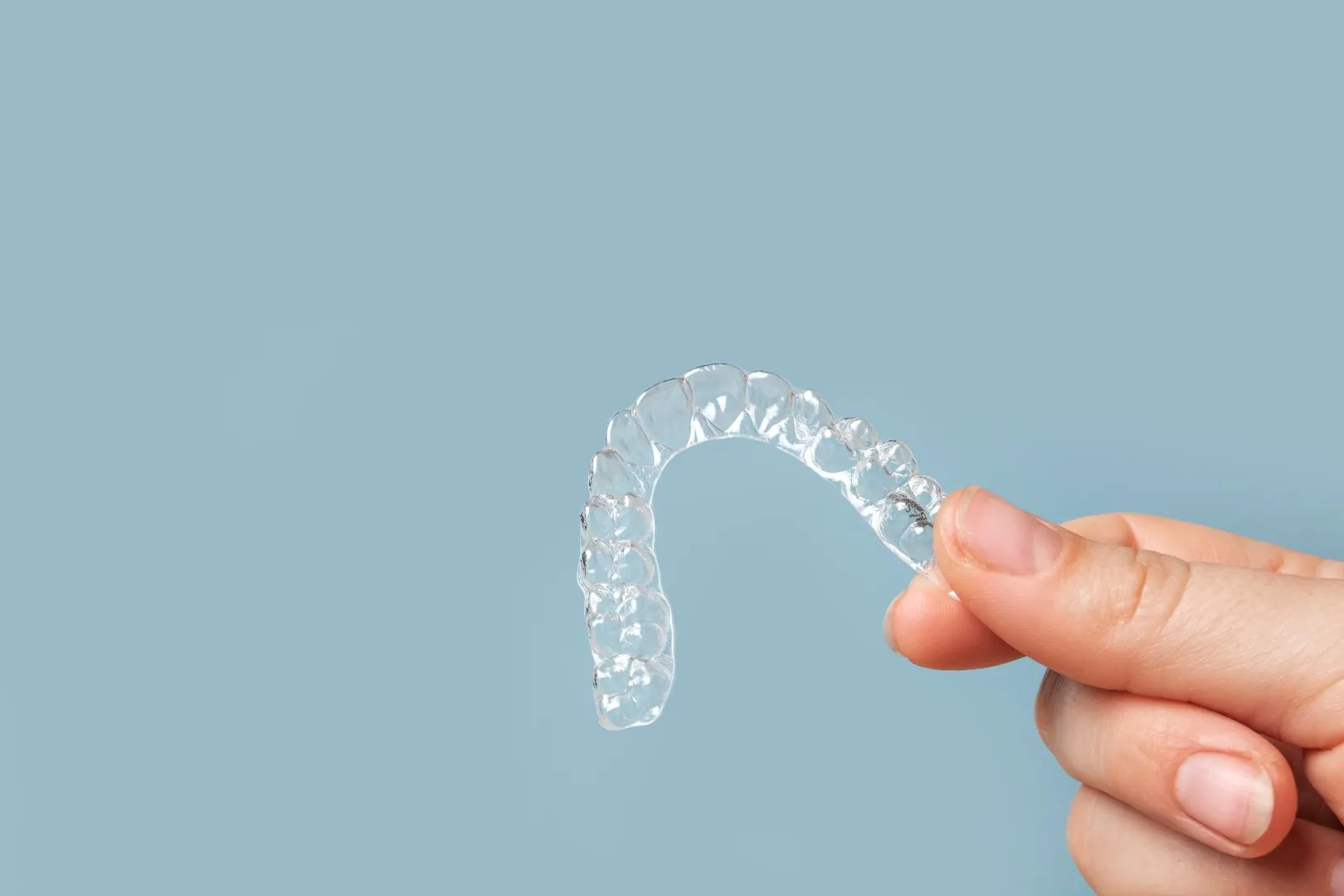
Interproximal reduction, or IPR, is the careful, precise removal of a small amount of enamel from between two teeth — often less than half a millimeter — to create a bit of extra room during Invisalign treatment. Done correctly by a trained orthodontist, it’s a safe, well-established technique that doesn’t weaken the tooth or increase your risk of cavities.
Why Would Invisalign Need to File Between Teeth?
Some crowding cases are close — there’s almost enough room for every tooth to align well, but not quite. Rather than extracting a tooth or trying to push the arch wider than it should comfortably go, a small, evenly distributed amount of IPR across several contact points can free up just enough space to finish aligning the teeth without those more involved steps. It’s also sometimes used to reshape teeth that are slightly larger or unevenly shaped, improving how they fit together once straightened.
Is Filing Enamel Actually Safe?
Enamel is thickest at the areas between teeth where IPR is performed, and the amount removed in a typical IPR procedure — generally 0.2 to 0.5 millimeters per contact point — is well within the range that's been studied and shown not to compromise the tooth's structural integrity or increase sensitivity or decay risk when done properly. Your orthodontist calculates exactly how much space is needed and distributes the reduction carefully across specific contact points rather than filing any one spot excessively.
The procedure itself is quick and doesn’t require anesthesia, since enamel has no nerve endings. Most patients describe it as similar in sensation to a routine dental cleaning.
What Does the IPR Process Involve?
- Planning — your orthodontist identifies exactly how much space your treatment plan needs and which contact points can safely provide it.
- The procedure — using a thin strip or handheld tool, your orthodontist removes a small, measured amount of enamel between specific teeth.
- Polishing and fluoride — the treated surface is smoothed and polished, and a fluoride treatment is often applied to help strengthen the area.
- Continued aligner treatment — your aligners use the newly created space as planned to complete alignment.
Does Everyone Need IPR With Invisalign?
No. IPR is used selectively, only in cases where a small amount of extra space genuinely helps the treatment plan — plenty of Invisalign patients complete treatment without it at all. Whether it’s part of your plan depends entirely on how much space your specific case needs and where your orthodontist determines that space can safely come from.
At Davis & Goldberg Orthodontics, IPR is only used when it’s the right tool for a specific spacing need — and if it’s part of your plan, we’ll walk you through exactly why, and how much, before doing it.
IPR vs. Extraction vs. Expansion
When a treatment plan needs more space than the arch naturally provides, orthodontists generally have three broad options, and cases often use a combination: interproximal reduction shaves a small amount of enamel across several contact points, extraction removes a tooth entirely to create more substantial room, and expansion (widening the arch with an appliance) creates space by changing the arch shape rather than the teeth themselves. IPR provides the smallest amount of space of the three — typically a few millimeters spread across the whole arch — which makes it appropriate for close, borderline crowding cases rather than significant crowding that genuinely needs extraction or expansion instead.
How Much Space Can IPR Really Create?
Done safely, IPR across a full arch of contact points can typically create somewhere in the range of a few millimeters of total space — not a dramatic amount, but often exactly the amount that separates a case that would otherwise need extraction from one that can be resolved more conservatively. Your orthodontist calculates the specific space your treatment plan needs and determines, using digital models, whether IPR alone gets you there or whether it should be combined with other approaches.
How Digital Planning Makes IPR More Precise
Modern IPR planning benefits enormously from digital treatment simulation. At Davis & Goldberg Orthodontics, our iTero 3D scanner captures a highly detailed model of your teeth, which our orthodontists use to calculate exactly how much space your treatment plan needs and precisely which contact points can safely provide it — distributing the reduction evenly rather than concentrating it in one spot. That same digital model lets us simulate how your smile is expected to look and fit together once the IPR and aligner treatment are both complete, so the amount of reduction is planned with the end result in mind, not decided on the fly.
Life After IPR
Once IPR is complete, there’s nothing special required in your daily care beyond your normal brushing and flossing routine — the treated areas heal and remineralize like any other polished enamel surface, and the fluoride treatment applied right after the procedure gives that area some extra reinforcement. Most patients forget it was even done once their aligner treatment finishes and their new smile is in place.
Frequently Asked Questions
Does IPR make teeth more sensitive afterward?
Most patients notice little to no sensitivity, and any that does occur is typically mild and short-lived, since the amount of enamel removed is small and the area is polished and treated with fluoride afterward.
Can IPR be done more than once on the same tooth?
It’s uncommon, since orthodontists calculate the needed reduction carefully in advance, but if a treatment plan changes, additional IPR at a different contact point on the same tooth is sometimes possible within safe limits.
Is IPR only used with Invisalign, or with braces too?
IPR is used with both braces and clear aligners whenever a small amount of extra space is needed — it’s a technique, not something exclusive to one treatment type.
Will IPR change how my teeth look?
The amount removed is small enough that it’s generally not noticeable in the final result, and any visible change is typically limited to very slightly narrower spaces between the treated teeth.
Can I request IPR instead of an extraction if I’d rather avoid removing a tooth?
Whether IPR can substitute for an extraction depends entirely on how much space your case actually needs — it's a decision your orthodontist makes based on your specific crowding, not simply a matter of preference between the two.
Does IPR need to be redone if I don’t wear my retainer afterward?
No — IPR itself doesn’t reverse, though not wearing your retainer as directed could allow teeth to shift and reopen small amounts of space over time, which is a separate concern from the IPR procedure itself.
Is IPR performed all at once or over several visits?
It depends on your treatment plan — some cases have all the needed IPR done in a single visit, while others spread it across a couple of appointments as different contact points become the priority.
Does insurance typically cover IPR as part of Invisalign treatment?
IPR is generally considered part of the overall orthodontic treatment plan rather than a separate billed procedure, so it’s usually included under whatever coverage applies to your Invisalign treatment as a whole.
Disclaimer: The content on this blog is not intended to be a substitute for professional medical advice, diagnosis, or treatment. Always seek the advice of qualified health providers with questions you may have regarding medical conditions.