
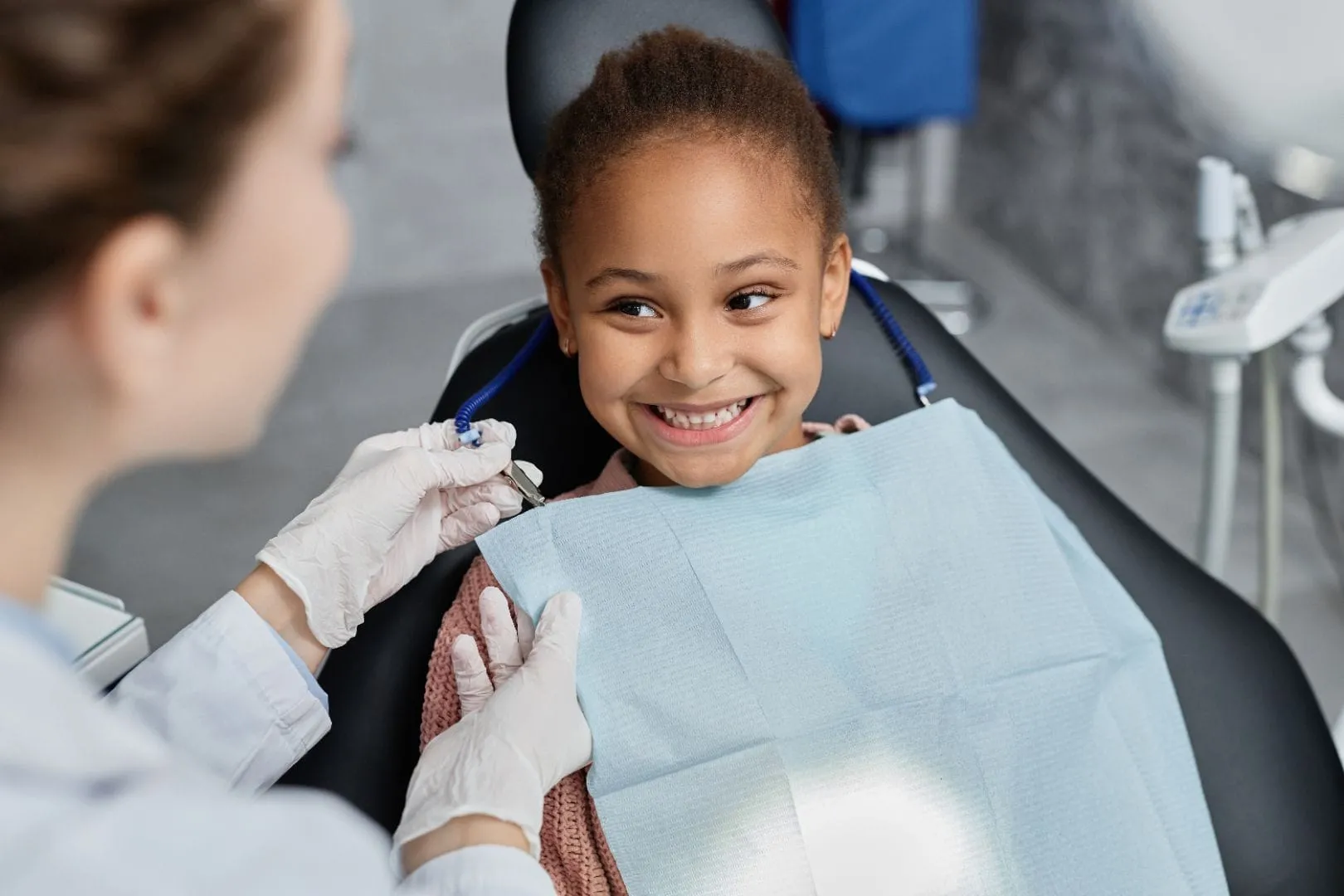
Phase 1 orthodontic treatment happens early, usually between ages 6 and 10, while a child still has baby teeth and the jaw is still growing — the goal is to guide that growth and make room for adult teeth. Phase 2 comes later, typically between ages 11 and 14 once all the permanent teeth have erupted, and uses braces or clear aligners to fine-tune the bite and final tooth positions. Not every child needs both phases, but understanding the difference helps parents know what to expect and why timing matters.
What Is Phase 1 (Early or Interceptive) Treatment?
Phase 1 treatment, sometimes called interceptive orthodontics, targets problems that show up long before all the adult teeth arrive — things like a narrow upper jaw, a significant underbite or crossbite, or crowding severe enough that incoming permanent teeth won’t have room to erupt properly. Because a child’s jaw bones are still developing at this age, an orthodontist can guide that growth in ways that simply aren’t possible once the bones have matured.
Common Phase 1 tools include palatal expanders to widen a narrow upper arch, partial braces to correct specific teeth, space maintainers to hold room open after an early baby tooth loss, and habit-correcting appliances for things like thumb sucking or tongue thrusting. The American Association of Orthodontists recommends every child have an orthodontic evaluation by age 7, which is usually when it becomes clear whether Phase 1 treatment would help.
The Resting Period Between Phases
After Phase 1 wraps up, most patients enter a resting period with no active appliances. This isn’t a pause in care — it’s the time it takes for the remaining permanent teeth to erupt naturally into the foundation Phase 1 built. Our team continues to monitor development during this stretch with periodic check-ins, so if anything needs attention before Phase 2 begins, we catch it early.
What Is Phase 2 (Comprehensive) Treatment?
Phase 2 begins once all (or nearly all) of the permanent teeth have come in, usually between ages 11 and 14. This is the phase most people picture when they think of “getting braces” — full braces or clear aligners that move every tooth into its final, correct position and fine-tune the bite. Because Phase 1 already addressed the underlying jaw and space issues, Phase 2 can often move faster and produce a more stable result than treatment started from scratch in the early teen years.
Does Every Child Need Both Phases?
No. Plenty of kids never need Phase 1 at all — if there's no significant jaw or space problem, waiting until all the permanent teeth erupt and moving straight into one comprehensive phase of treatment (essentially Phase 2 on its own) works perfectly well. Phase 1 is reserved for cases where waiting would let a growth or space problem get worse, not used as a default first step for every young patient.
Signs a Child Might Benefit From Phase 1
- A visibly narrow upper jaw, crossbite, or underbite
- Severe crowding that’s already affecting how permanent teeth are coming in
- Habits like prolonged thumb sucking, tongue thrusting, or mouth breathing that are shaping the bite
- Early loss of a baby tooth that could let neighboring teeth drift into the open space
- Protruding front teeth at higher risk of injury
Why Timing Matters
The advantage of two-phase treatment isn’t just convenience — it’s biology. Guiding jaw growth only works while a child is actually growing. Waiting until age 13 to address a narrow palate or significant skeletal underbite means that window has often closed, and the only remaining options may be more involved, like extractions or, in adulthood, jaw surgery. Catching these issues at age 7 or 8 gives our orthodontists tools they simply won’t have a few years later.
At Davis & Goldberg Orthodontics, we build every treatment plan — one phase or two — around what a specific child’s growth actually calls for, using digital scans and X-rays to track how the jaw and teeth are developing over time rather than guessing. If your child is approaching that first evaluation age, our Two-Phase Treatment resource walks through what to expect at each stage.
| Phase 1 | Phase 2 | |
|---|---|---|
| Typical age | 6–10 years | 11–14 years |
| Teeth present | Mostly baby teeth | Mostly/all permanent teeth |
| Main goal | Guide jaw growth, create space | Final tooth alignment & bite |
| Common appliances | Expanders, space maintainers, partial braces | Full braces or clear aligners |
What Happens at a Two-Phase Evaluation?
An early evaluation isn’t just a quick look in your child’s mouth. Our orthodontists take digital scans and X-rays to see how the permanent teeth are positioned beneath the gums, measure how the upper and lower jaws relate to each other, and check for the habits — thumb sucking, tongue thrusting, mouth breathing — that can shape a developing bite. From there, we can tell you plainly whether Phase 1 treatment would genuinely help, or whether it makes more sense to simply monitor growth and revisit the conversation in a year or two.
This distinction matters because Phase 1 treatment is an investment of time for your child and your family, and it should only be recommended when the growth window it depends on is actually open and there’s a clear problem worth addressing early.
What Does Two-Phase Treatment Cost?
Because two-phase treatment is really two separate stages of care, many practices structure the cost accordingly — Phase 1 is billed as its own course of treatment, and Phase 2 is billed separately once it begins, rather than as one combined upfront fee. This also means insurance benefits, if you have orthodontic coverage, may apply to each phase. Our team walks through the specific cost breakdown and available payment plans for your child’s recommended plan at the consultation, so there are no surprises between phases.
How We Track Growth Between Phases
One of the reasons digital technology has changed early orthodontics for the better is how precisely it lets us track growth over time. At Davis & Goldberg Orthodontics, we use an iTero 3D digital scanner and digital X-rays — which expose patients to up to 90% less radiation than older film-based X-rays — to build a detailed, comparable record of your child’s jaw and tooth development at each visit. Instead of relying on general impressions from one appointment to the next, we can overlay scans from different visits and see exactly how much a jaw has widened, how much space has opened, or how a permanent tooth’s eruption path has shifted since the last check-in. That precision is part of what makes it possible to confidently recommend a resting period rather than jumping straight into more treatment “just in case.”
What If My Child Isn’t Ready for Phase 1 Yet?
Plenty of children come in for that first evaluation and simply aren’t ready for any treatment yet — and that’s a perfectly good outcome. Rather than sending families away with nothing, our Kids Club and Pre-Orthodontic Observation Program invites children to come back every six months for a free evaluation until the timing is actually right. Members also get a VIP card and small perks along the way, which makes the waiting period feel less like nothing is happening and more like part of an ongoing plan. No referral is needed, and these visits are no-charge until treatment actually begins.
Frequently Asked Questions
Does Phase 1 treatment replace the need for braces later?
Usually not entirely. Phase 1 addresses growth and space problems while a child’s jaw is still developing; most patients still need some Phase 2 treatment once all their adult teeth arrive, though it’s often shorter and simpler because Phase 1 already built the right foundation.
How long is the resting period between phases?
It varies by child, since it depends on how quickly the remaining permanent teeth erupt — it can range from several months to a couple of years. We schedule periodic check-ins throughout so nothing is missed.
What happens if we skip Phase 1 when an orthodontist recommends it?
The specific growth or space problem doesn’t resolve on its own and can become more complex to treat once the jaw stops growing, sometimes requiring extractions or, in adulthood, surgical correction that could have been avoided with earlier intervention.
At what age should my child have their first orthodontic evaluation?
The American Association of Orthodontists recommends an evaluation by age 7, even if your child isn’t showing obvious problems. This gives an orthodontist the chance to catch developing issues while there’s still time to guide growth.
Is Phase 1 treatment more common today than it used to be?
Interceptive treatment has become more refined over the years, with tools like palatal expanders and habit-correcting appliances allowing orthodontists to address specific growth problems more precisely, but it’s still recommended selectively — not as a default step for every young patient.
Disclaimer: The content on this blog is not intended to be a substitute for professional medical advice, diagnosis, or treatment. Always seek the advice of qualified health providers with questions you may have regarding medical conditions.