
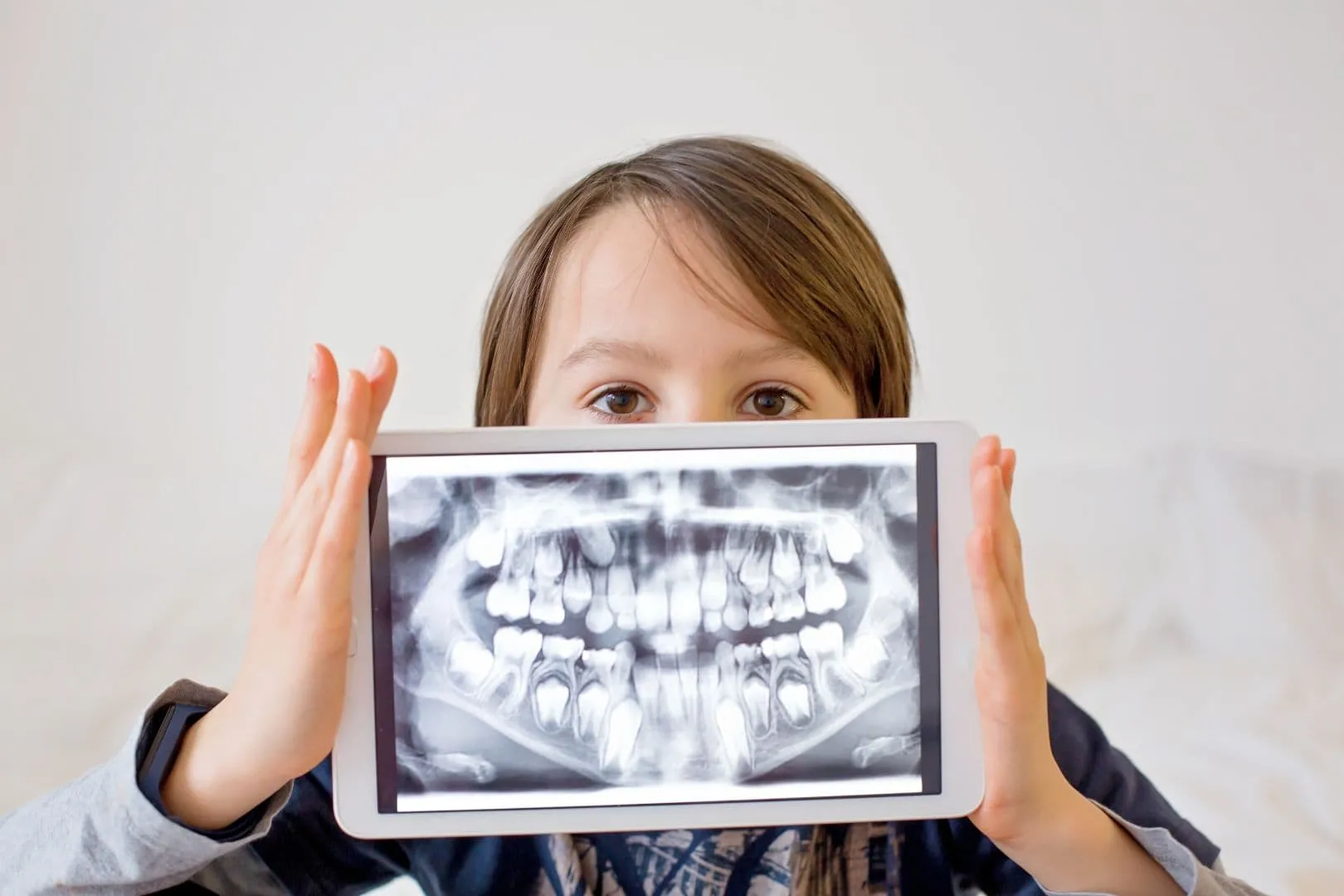
iTero 3D scanning is a digital imaging technology that captures a complete, highly detailed model of your teeth and bite in just a few minutes, replacing the messy putty impressions orthodontists used for decades. It improves treatment by giving your orthodontist a more accurate starting model, a clearer way to show you how your smile is projected to move, and a faster, more comfortable visit overall. The result is a treatment plan built on precise data rather than an impression that can shift or distort before it reaches the lab.
What Is an iTero 3D Scanner?
An iTero scanner is a handheld wand that a member of our team guides around your teeth and gums to build a digital, three-dimensional model of your mouth in real time. As it scans, the model appears on a screen right in front of you, so you can watch your own smile take shape digitally. There's no tray of putty to bite down on and hold still for, and no risk of a gag reflex ruining an impression halfway through — a scan typically takes just a few minutes from start to finish.
How iTero Scanning Improves Accuracy
Traditional putty impressions can shrink, warp, or trap air bubbles between the time they're taken and the time they're poured into a plaster model, and any of those issues can throw off the fit of an appliance or aligner. A digital scan skips that entire process. The scanner captures thousands of data points directly from your teeth, so the model your orthodontist works from is an exact match to what's actually in your mouth — not a physical impression that had to survive a trip to a lab intact.
That accuracy matters most when it feeds directly into a treatment appliance. Clear aligners, retainers, and certain other appliances are often manufactured straight from the digital scan data, so a more precise starting model tends to mean a better-fitting final product and fewer adjustment visits down the road.
A More Comfortable Visit
Anyone who has had a traditional impression taken remembers the tray of putty, the taste, and the wait for it to set while trying not to move. iTero scanning removes nearly all of that. There's no material in your mouth at all beyond the scanning wand itself, no gag-inducing tray, and no mess. For younger patients or anyone with a strong gag reflex, this alone can make a real difference in how comfortable an orthodontic visit feels.
Seeing Your Treatment Before It Starts
One of the more useful features of iTero technology is the ability to generate a simulation of how your teeth are projected to move over the course of treatment, based on your actual scan. Being able to see a visual projection — rather than just hearing a verbal description — helps patients understand what a treatment plan is actually trying to accomplish and gives our orthodontists a clear reference point to check progress against as treatment moves forward.
iTero Scanning and Clear Aligner Treatment
For patients considering Invisalign or other clear aligner systems, an iTero scan is typically the very first step. The digital model generated by the scan is what's used to design the full series of aligners, mapping out the exact, incremental movements each tray needs to make. Because the scan is this precise, the aligners that come back from the lab are built to fit the treatment plan closely from the first tray to the last.
Where iTero Scanning Is Used in Treatment
- Initial diagnostic records and treatment planning
- Designing clear aligners and certain retainers
- Tracking tooth movement and jaw growth over time by comparing scans from different visits
- Replacing a lost or damaged retainer without a new physical impression
Tracking Progress Over Time
Because each iTero scan is saved as digital data, our orthodontists can overlay a new scan directly on top of an older one and see precisely what has changed — how much a tooth has shifted, how a bite relationship has improved, or how a jaw has grown between visits. That side-by-side comparison is far more exact than judging progress by eye alone, and it lets us catch a plan that needs a small adjustment sooner rather than later.
Is iTero Scanning Right for Every Patient?
Nearly every patient who comes through our practice for an evaluation, active treatment, or a retainer check benefits from digital scanning, regardless of age or the type of appliance being considered. The technology works the same way whether you're a child coming in for an early evaluation or an adult exploring clear aligners. At Davis & Goldberg Orthodontics, we use iTero 3D scanning alongside digital X-rays — which expose patients to significantly less radiation than older film-based X-rays — as part of a fully digital approach to diagnosing and planning treatment.
Replacing a Lost or Damaged Retainer With a Digital Scan
One of the more practical, everyday uses of iTero technology has nothing to do with starting new treatment at all — it's replacing a lost or broken retainer. Traditionally, this meant scheduling a visit for a new putty impression before a replacement could even be ordered. With a digital scanner on hand, our team can take a new scan on the spot and send it straight to the lab, cutting real time out of a process that used to involve an extra impression step. If your retainer has already been saved from a prior visit, in some cases the file can be pulled up and reordered without a new scan at all.
How iTero Scanning Fits Into a First Visit
For a new patient, an iTero scan is usually one of the first things that happens at an evaluation, alongside digital X-rays and a conversation about your goals. The scan itself doesn't require any preparation on your part — you don't need to avoid eating or drinking beforehand, and there's no numbing or sedation involved. Once the model is captured, our orthodontists can review it with you right away, pointing out specific areas of crowding, spacing, or bite misalignment directly on the 3D image rather than describing them in the abstract.
Digital Scans and Long-Term Record Keeping
Because iTero scans are stored digitally, they become a permanent, easily retrievable part of your treatment record. That matters beyond just the active phase of treatment — if a question comes up years later about how your bite has changed, or if a retainer needs replacing well after treatment has finished, having an accurate historical scan on file makes it much easier for our team to pick up exactly where things left off, rather than starting from scratch.
Frequently Asked Questions
Does an iTero scan replace X-rays?
No. An iTero scan captures the visible surfaces of your teeth and gums, while X-rays show what's happening below the gumline — root positions, unerupted teeth, and bone structure. Orthodontists use both together to get a complete picture before recommending a treatment plan.
Is iTero scanning uncomfortable?
Most patients find it considerably more comfortable than a traditional putty impression. The wand itself is compact and there's no material to bite into or hold in place while it sets.
How long does an iTero scan take?
A full scan of the upper and lower teeth usually takes just a few minutes, though the exact time can vary depending on how much detail is needed for your specific treatment plan.
Can I see the results of my scan right away?
Yes. The 3D model builds on screen as the scan happens, so you can watch it in real time, and our team can walk you through what it shows immediately afterward.
Do I need a referral to get an iTero scan for an evaluation?
No referral is needed. You can schedule a complimentary evaluation directly with our team, and a digital scan is typically part of that first visit.
Can an iTero scan be used to order a replacement retainer without a new office visit?
In some cases, if a recent scan is already saved on file, our team may be able to reorder a replacement retainer from that existing file; if enough time has passed, a new scan is typically taken to make sure the replacement fits your current bite accurately.
Disclaimer: The content on this blog is not intended to be a substitute for professional medical advice, diagnosis, or treatment. Always seek the advice of qualified health providers with questions you may have regarding medical conditions.